Sandeep moved to Dubai with a salary of AED 5,500. He thought, “No tax, good salary—I’ll save a lot.”
But after a few months, he noticed something stressful:
His salary was finishing before the month ended.
Rent, groceries, transport, and weekend outings were eating up his income. Sometimes he even used his credit card to survive till the next salary.
This is a very common situation in cities like Dubai and Abu Dhabi.
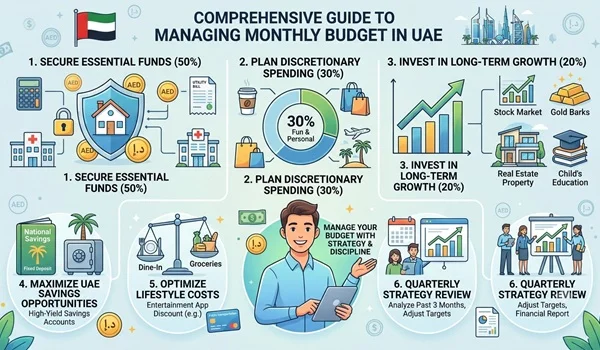
The reality is:
It’s not about how much you earn—it’s about how well you manage your money.
The good news?
With a simple budgeting system, even a person earning AED 3,500–6,000 can control expenses, avoid stress, and start saving every month.
Let’s break it down step-by-step in the easiest way possible.
- Understand Your Monthly Reality (Income vs Expenses)
Before making a budget, you must know:
👉 How much money is coming in
👉 Where it is going
Real Example (Dubai Expat Budget)
| Category | Amount (AED) |
| Salary | 5,500 |
| Rent (shared room) | 2,000 |
| Food | 900 |
| Transport | 300 |
| Mobile + Internet | 200 |
| Lifestyle (shopping, eating out) | 1,200 |
| Savings Left | 900 (often becomes 0) |
👉 The problem?
Unplanned spending removes savings.
- Use a Simple Budget Rule (60-20-20 for UAE)
Because rent is high in UAE, use this practical rule:
Budget Formula:
- 60% → Needs (rent, food, transport, bills)
- 20% → Wants (shopping, outings)
- 20% → Savings
Example (AED 5,000 Salary)
| Category | Amount |
| Needs (60%) | 3,000 |
| Wants (20%) | 1,000 |
| Savings (20%) | 1,000 |
Insider Tip:
👉 If your needs go above 70%, you must reduce expenses (especially rent).
- Control Your Biggest Expense: Rent
In UAE, rent is the biggest expense.
Smart Ways to Reduce Rent:
- Share room or bed space
- Live in budget-friendly areas:
- Dubai → Deira, Al Nahda, International City
- Abu Dhabi → Mussafah, Baniyas
- Avoid luxury apartments initially
Mistake to Avoid:
❌ Renting expensive apartment for comfort/status
👉 Your goal is savings, not showing off.
- Track Every Dirham (This Changes Everything)
Most people don’t know where their money goes.
Simple Method:
- Use Notes app or Excel
- Write down every expense for 30 days
You’ll Discover:
- Hidden spending (coffee, snacks, delivery)
- Unnecessary habits
👉 Awareness = control
- Follow “Save First, Spend Later”
This is the golden rule.
Wrong Way:
Spend → Save (nothing left)
Right Way:
Save → Spend
How to Do It:
- As soon as salary comes:
- Transfer 20% to savings account
- Use remaining for expenses
- Reduce Daily Expenses (Small Changes = Big Savings)
Common Daily Expenses:
- Coffee (AED 15/day = AED 450/month)
- Food delivery
- Online shopping
Smart Tips:
- Cook at home
- Carry water/food
- Avoid impulse buying
👉 Saving AED 20/day = AED 600/month
= AED 7,200/year
- Transport Planning (Save Hundreds Monthly)
Comparison:
| Mode | Monthly Cost |
| Taxi Daily | 800–1,200 AED |
| Metro + Bus | 200–350 AED |
Smart Choice:
- Use Metro (Dubai)
- Use Nol card
- Avoid taxis unless necessary
- Plan Grocery & Food Budget
Food can go out of control if not planned.
Strategy:
- Shop from budget stores:
- Lulu Hypermarket
- Carrefour
- Buy weekly, not daily
- Avoid daily ordering
Example:
| Option | Monthly Cost |
| Daily Delivery | 1,500+ AED |
| Home Cooking | 600–800 AED |
👉 Huge difference!
- Manage Credit Cards Carefully
Credit cards are helpful—but risky.
Common Mistakes:
❌ Paying minimum amount
❌ Multiple cards
❌ Buying unnecessary items
Rule:
👉 Only spend what you can repay fully
- Build an Emergency Fund
In UAE:
- Job loss = visa issue
- Medical costs are high
Target:
Save 3–6 months of expenses
Example:
Expense = AED 3,000
Emergency fund = AED 9,000–18,000
- Compare Living Costs (Choose Smart Location)
| City | Rent | Living Cost | Saving Potential |
| Dubai | High | Very High | Low |
| Abu Dhabi | High | High | Medium |
| Sharjah | Medium | Medium | High |
👉 Many expats live in Sharjah and work in Dubai to save more.
- Set Monthly Financial Goals
Without goals, budget fails.
Examples:
- Save AED 1,000/month
- Build AED 10,000 emergency fund
- Clear debt in 6 months
👉 Write it down and track progress.
- Increase Income (If Budget Is Tight)
Sometimes cutting expenses is not enough.
Options:
- Freelance work
- Learn new skills
- Switch to higher-paying job
👉 More income = easier saving
Common Mistakes to Avoid
❌ Not tracking expenses
❌ Living paycheck to paycheck
❌ Overspending on lifestyle
❌ Ignoring savings
❌ Using credit cards wrongly
❌ No financial goals
FAQs (Real Questions Expats Ask)
- How much should I save monthly in UAE?
At least 20% of your salary. If possible, aim for more.
- Is AED 4,000–5,000 salary enough in Dubai?
Yes, but only with strict budgeting and shared accommodation.
- How can I reduce monthly expenses quickly?
- Reduce rent
- Cook at home
- Stop unnecessary spending
- Should I use credit card in UAE?
Yes, but only if you can pay the full bill every month.
- What is the biggest mistake in budgeting?
Not tracking expenses and spending blindly.
Final Action Plan (Start Today)
If you want to take control of your money, follow this:
Step 1:
Track all expenses for next 30 days
Step 2:
Create a simple 60-20-20 budget
Step 3:
Save 20% as soon as salary comes
Step 4:
Reduce rent and food costs
Step 5:
Avoid unnecessary debt
Step 6:
Build emergency fund
Final Thought
Living in the UAE gives you:
✔ Better earning opportunity
✔ Tax-free income
But without budgeting:
❌ Money disappears quickly
👉 The difference between stress and stability is money management.
Start small. Stay consistent.
Within a few months, you will feel more control, less stress, and better savings.
