Ali moved to Dubai with a salary of AED 5,000. At first, everything felt exciting—tax-free income, modern lifestyle, and better opportunities. But within 3 months, his bank balance was almost zero.
Rent was high, groceries were expensive, and weekend outings added up quickly. He wasn’t saving anything.
This is the reality for many expats in the UAE.
Even with a “good salary,” people struggle because:
- Cost of living is high (especially in Dubai and Abu Dhabi)
- No structured financial planning
- Easy lifestyle spending (food delivery, malls, travel)
- No tax doesn’t mean no financial stress
The good news?
With the right approach, you can save money, reduce stress, and build a strong financial future in the UAE.
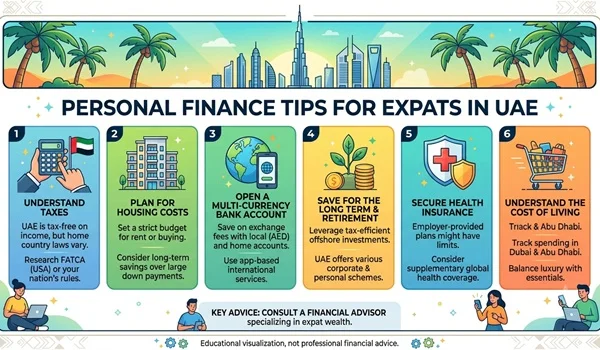
Let’s break it down step-by-step.
- Understand Your Real Income (Not Just Salary)
Most expats think:
“My salary is AED 6,000, I’m doing okay.”
But the truth is:
👉 Your real income = Salary – Fixed Expenses
Example (Dubai Resident)
| Category | Amount (AED) |
| Salary | 6,000 |
| Rent (shared room) | 1,800 |
| Food | 800 |
| Transport | 400 |
| Mobile + Internet | 200 |
| Misc (shopping, eating out) | 1,200 |
| Savings left | 1,600 |
But in reality, many people overspend and save 0 or even go into debt.
Tip:
Track your expenses for at least 30 days. You’ll be surprised where your money goes.
- Follow the 50-30-20 Rule (Modified for UAE)
This rule is simple but powerful.
Standard Rule:
- 50% → Needs (rent, food, bills)
- 30% → Wants (shopping, outings)
- 20% → Savings
UAE Reality (Better Version):
Because rent is high, adjust it:
- 60% → Needs
- 20% → Wants
- 20% → Savings
Practical Example:
If you earn AED 5,000:
- Needs → AED 3,000
- Wants → AED 1,000
- Savings → AED 1,000
Insider Advice:
👉 If your rent alone is taking 50%+, you need to:
- Shift to shared accommodation
- Move slightly outside city center
- Negotiate rent yearly
- Biggest Expense in UAE = Rent (Control It Smartly)
In cities like Dubai and Abu Dhabi, rent is your biggest cost.
Smart Strategies:
- Share apartment instead of taking studio
- Choose areas like:
- Dubai → Deira, International City, Al Nahda
- Abu Dhabi → Mussafah, Baniyas
- Pay yearly instead of monthly (often cheaper)
Common Mistake:
Taking a “fancy apartment” just for status.
👉 Reality: Nobody cares. Your savings matter more.
- Avoid the “Lifestyle Trap”
When salary increases, spending also increases.
Example:
- Salary goes from AED 4,000 → 7,000
- Instead of saving more, people:
- Upgrade phone 📱
- Eat out more 🍔
- Travel more ✈️
Result:
Still no savings.
Rule:
👉 Increase savings FIRST, then lifestyle.
- Build an Emergency Fund (Very Important in UAE)
In the UAE:
- Jobs are not always secure
- Visa depends on job
- Medical emergencies can be expensive
You MUST save:
👉 At least 3–6 months of expenses
Example:
If your monthly expense = AED 3,000
Emergency fund = AED 9,000 – 18,000
Where to keep it:
- UAE savings account
- Not in cash at home
- Sending Money Home? Do It Smartly
Many expats send money to India, Pakistan, Nepal, etc.
Tips:
- Compare exchange rates before sending
- Avoid sending daily/weekly (fees add up)
- Send in bulk monthly
Use trusted exchange houses for better rates.
- Avoid Debt Traps (Credit Cards & Loans)
Credit cards are very common in UAE—and dangerous if misused.
Common Mistakes:
- Minimum payment only
- Multiple credit cards
- Personal loans for luxury
Reality:
Interest rates can go 30–40% yearly
Smart Rules:
- Use credit card only if you can pay full bill
- Avoid unnecessary loans
- Don’t fall for “0% EMI” traps blindly
- Save Before You Spend (Golden Rule)
Most people:
Spend → Then try to save
Smart people:
Save → Then spend
Simple Trick:
As soon as salary comes:
- Transfer 20% to savings account
- Use rest for expenses
- Learn Basic Investing (Don’t Keep All Money Idle)
Saving is good, but investing is better.
Beginner Options for Expats:
- Mutual funds (India or international)
- SIP (Systematic Investment Plan)
- Gold (digital or physical)
- Fixed deposits (low risk)
Example:
If you invest AED 500/month:
- In 5–10 years → Big wealth can build
Mistake to Avoid:
Keeping all money in savings account = low growth
- Compare Cost of Living (Dubai vs Abu Dhabi vs Sharjah)
| Expense | Dubai | Abu Dhabi | Sharjah |
| Rent | High | High | Medium |
| Transport | Medium | Medium | Low |
| Food | Medium | Medium | Medium |
| Lifestyle Cost | Very High | High | Moderate |
| Savings Potential | Low | Medium | Higher |
Insight:
👉 Many expats save more by living in Sharjah and working in Dubai.
- Reduce Daily Expenses (Small Changes = Big Savings)
Practical Tips:
- Cook at home instead of ordering daily
- Use public transport (metro/bus)
- Buy groceries in bulk
- Avoid daily coffee spending (AED 15/day = AED 450/month!)
Example:
Saving AED 20/day = AED 600/month
= AED 7,200/year
- Insurance & Protection (Often Ignored)
Must-Have:
- Health insurance (usually employer provides)
- Life insurance (if you have family)
Why?
Medical costs in UAE are very high.
- Plan Your Long-Term Goals
Ask yourself:
- Do I want to return to my home country?
- Do I want to settle in UAE?
- Do I want to start a business?
Based on this:
- Plan savings
- Plan investments
- Avoid random spending
Common Mistakes Expats Make (Avoid These)
❌ Living paycheck to paycheck
❌ No savings at all
❌ Taking loans for luxury
❌ Ignoring emergency fund
❌ Not tracking expenses
❌ Copying others’ lifestyle
FAQs (Real Questions Expats Ask)
- How much should I save monthly in UAE?
At least 20% of your salary. If possible, aim for 30%.
- Is AED 5,000 salary enough in Dubai?
Yes, but only with:
- Shared accommodation
- Controlled lifestyle
Saving will be limited but possible.
- Should I invest in UAE or my home country?
You can do both:
- Short-term → UAE savings
- Long-term → Investments in home country (like India SIPs)
- Is credit card good or bad in UAE?
Good if used wisely, bad if misused.
Always pay full bill on time.
- How can I save faster in UAE?
- Reduce rent
- Avoid lifestyle inflation
- Increase income (side skills/job)
Final Action Plan (What You Should Do Next)
If you are an expat in the UAE, don’t just read this—take action today:
Step 1:
Track your expenses for the next 30 days
Step 2:
Create a simple budget (60-20-20 rule)
Step 3:
Start saving at least 20% immediately
Step 4:
Build emergency fund (3–6 months)
Step 5:
Avoid unnecessary debt
Step 6:
Start small investing (even AED 200–500/month)
Final Thought
The UAE gives you a big opportunity:
✔ Tax-free income
✔ Better earning potential
But without planning, money disappears fast.
👉 The difference between struggling and growing is financial discipline.
Start small, stay consistent, and within a few years—you can build real wealth even with an average salary.
